Article · Housing market
West Virginia Has Two Housing Markets, and the Statewide Number Describes Neither
The eastern panhandle prices on Washington commuter access. The rest of the state prices on local economies. The gap is more than double, and the statewide median falls in a gap where almost no houses actually sell.

- $154,750Median sale price, Saint Albans, six-month report (Redfin July: $167K)
- $414,945Median sale price, Charles Town, six-month report (Redfin July: $419K)
- 2.5 to 2.7xThe gap between them, inside one state, depending on the window
- $265,000The statewide median, May 2026, which describes almost nothing

West Virginia’s statewide median sale price was about $265,000 in May 2026 and $274,000 in June. Almost nobody buys a house at that price there.
Not because the number is wrong. Because it is an average of two markets that have nothing to do with each other, and it lands in the empty space between them.
A note on the figures before the tables. The six-month closing medians below come from a single market report that we could not check against the original source. So each row also shows Redfin’s monthly median sale price for the same market as of July 2026. The two windows differ, and so do the numbers, but the pattern is the same in both, and the pattern is the point.
The eastern panhandle
Five of the state’s highest-volume markets sit in the eastern panhandle, within commuting distance of the Washington region:
| Market | Six-month median (report) | Redfin, July 2026 |
|---|---|---|
| Charles Town | $414,945 | $419,000 |
| Ranson | $346,790 | $330,000 |
| Hedgesville | $339,500 | $280,000 (9 sales) |
| Inwood | $325,287 | $305,000 |
| Martinsburg | $300,000 | $287,000 |
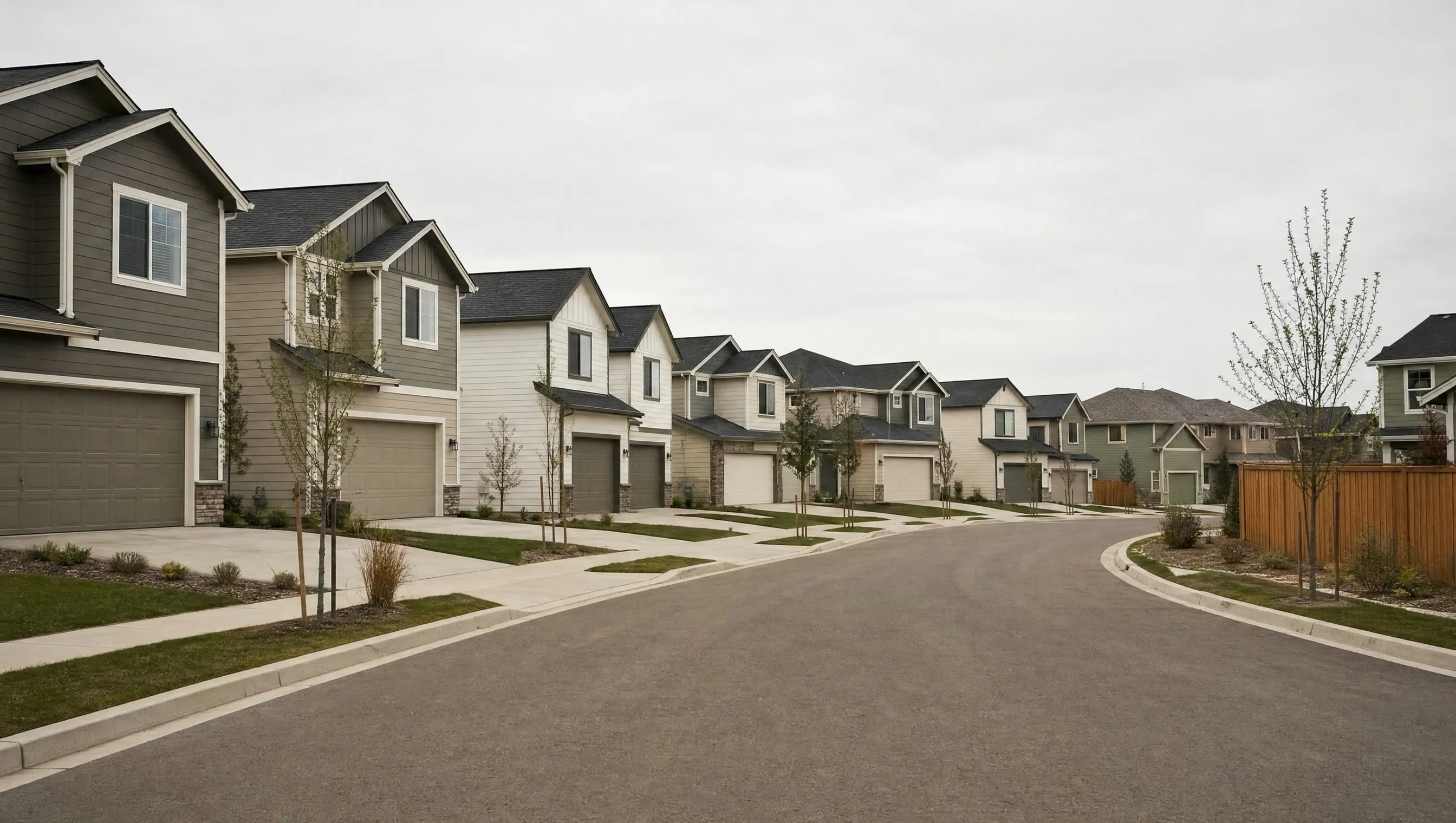
All five close at or above the statewide median in both sources. They are priced by proximity to a metro economy that happens to be in another state. Buyers there are frequently people who work toward Washington and bought where their money went further, which makes those markets behave like the outer edge of a very expensive region rather than like West Virginia.
The rest of the state
The traditional West Virginia cities price on their own local economies:
| Market | Six-month median (report) | Redfin, July 2026 |
|---|---|---|
| Charleston | $200,000 | $230,000 |
| Wheeling | $185,000 | $174,000 |
| Huntington | $160,000 | $160,000 |
| Parkersburg | $159,500 | $150,000 |
| Saint Albans | $154,750 | $167,000 |
All five close below the statewide median in both sources, most of them well below. Saint Albans and Charles Town differ by a factor of 2.7 in the six-month report and 2.5 in Redfin’s July figures, inside a single state.
Morgantown, at $310,000 in the report and $280,000 on Redfin, belongs to neither group. It is a university market, priced by student housing demand and a hospital system, and its economics do not resemble either the commuter belt or the river cities.
Why this matters more than a curiosity
For sellers, it is the difference between selling and sitting. A homeowner in Parkersburg who anchors to the statewide median of $265,000, against a local median between $150,000 and $160,000, is pricing at roughly 70 percent above the market. That is not aiming high. Statewide, FRED puts the median listing price at $260,000 for June 2026, close to the sale median, which means the anchoring problem is local, not statewide: it shows up when a seller in a $160,000 market reads a $265,000 number.
For buyers, it distorts what looks affordable. Someone comparing states on a median-price chart sees West Virginia at $265,000 and files it as moderately cheap. The parts of the state most people mean when they say West Virginia are closer to $160,000, and the parts driving the average up are a commuter suburb of a different metro.
For comparable sales, the two groups should never cross. A Charles Town comp has no bearing on a Huntington valuation. They share a state line and nothing else.
The same problem everywhere
West Virginia makes this unusually visible because the two markets are so far apart and so cleanly separated by geography. But every state does some version of it.
Statewide medians average metro areas against rural counties, commuter belts against local economies, university towns against everything else. The resulting number is real arithmetic and a poor description of any actual place. It is the same reason national cost-of-living rankings say so little about what a specific town costs.
The practical rule is the same everywhere: the state tells you almost nothing, the county tells you something, and the specific town tells you most of what you need.
What to do with this
Price against your own market, not the state. Pull closed sales from the same town, ideally the same few square miles, in the last six months. Ignore anything from the other group.
Watch the ask-to-close gap. Redfin’s sale-to-list ratio for Charleston in July 2026 was 96.5 percent, meaning homes there closed about three and a half percent under asking. A market where that gap is wide is one where sellers are anchored to the wrong number, and that is a market where offers get accepted.
Understand which economy you are buying into. Panhandle prices depend on Washington-area employment and commuting patterns holding up. River city prices depend on local employment, which the WVU Bureau of Business and Economic Research expects to stay essentially flat through 2029. Those are different risks, not different sizes of the same risk.
Look at the towns nobody ranks. The interesting prices in West Virginia are not in the highest-volume markets at all. They are in the counties that never generate enough transactions to appear in a report, which is where most of what we feature on the properties page comes from.
Frequently asked questions
What is the median home price in West Virginia? Around $265,000 statewide in May 2026 and $274,000 in June, per Redfin, but that figure averages two very different markets. Eastern panhandle communities close between roughly $280,000 and $420,000, while traditional cities like Huntington, Parkersburg and Saint Albans close between roughly $150,000 and $230,000.
Why is the eastern panhandle so much more expensive? It is within commuting distance of the Washington, D.C. region. Those markets are priced by access to a metro economy in another state rather than by West Virginia’s own.
Where are the cheapest housing markets in West Virginia? Among the higher-volume markets, Parkersburg, Saint Albans and Huntington, all between roughly $150,000 and $167,000 depending on the source and window. Smaller counties that do not generate enough sales to appear in market reports are often cheaper still.
Is West Virginia a good place to buy an affordable home? The non-panhandle parts of the state are among the more affordable in the country by price, with the usual caveats about local employment and how long a property might take to resell.
Why do statewide median prices mislead? Because they average markets that do not compete with each other. When a state contains both a commuter suburb of an expensive metro and a set of small local-economy cities, the median lands between the two and describes neither.
The email
We find the affordable end of this market: homes, land, and acreage listed well under the national median. The best of it goes out by email as we find it.