Article · Housing market
What Happens in a Housing Market Crash
Everyone writes predictions. Almost nobody explains the mechanics. Here is what a housing crash is, what causes one, what happens in what order, and who it hits hardest.

- 20%+The decline usually needed to call it a crash
- 2006When the last U.S. housing crash began
- 6 yearsHow long that decline took to bottom out
- LocalWhere most housing crashes happen
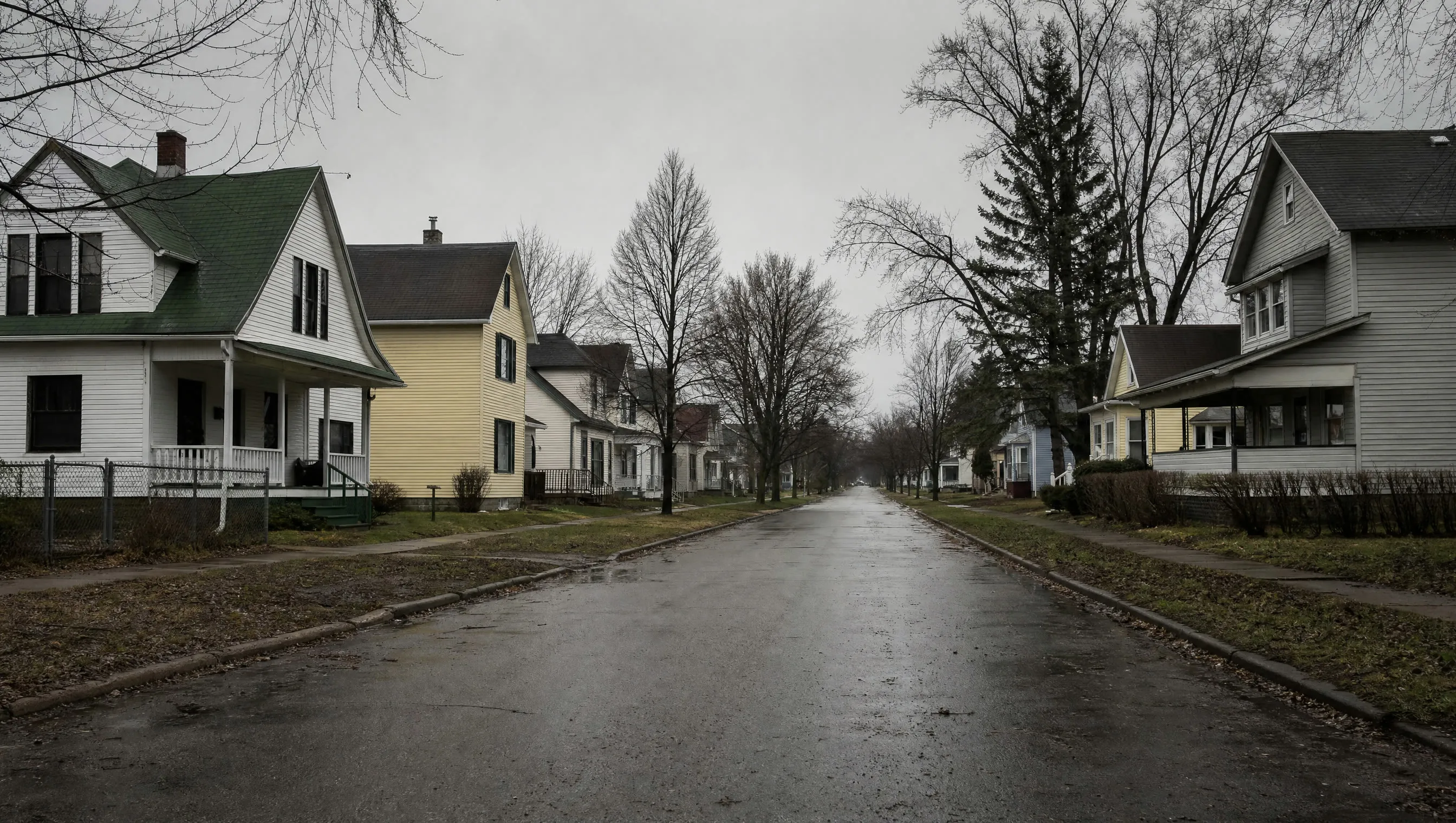
A housing crash is a rapid, broad decline in home prices, usually 20% or more, driven by forced selling rather than choice.
That last part is what separates a crash from a slowdown. In a slowdown, sellers who do not like the price take their house off the market. In a crash, they cannot, because they have to sell. Whether 2026 looks like the first or the second is the question underneath every crash prediction.
Understanding the difference is most of what people are looking for when they search this question.
What causes one
Housing crashes have a small number of recognizable causes, and they usually appear together.
Credit that should not have been extended. Loans written to people who cannot repay them under realistic conditions. This was the core of 2008: adjustable-rate mortgages, minimal documentation, and payments that were affordable only while prices kept rising.
A rate or payment shock. Something that makes existing payments unaffordable at scale. Adjustable mortgages resetting upward is the classic version.
Oversupply. More housing built than the population needs. When demand pauses, the excess has nowhere to go and prices fall to clear it.
An economic shock. Widespread job losses turn ordinary mortgages into missed payments regardless of how carefully they were underwritten.
Speculation. Buyers purchasing on the expectation of resale rather than to live somewhere. Speculative demand disappears instantly when prices flatten, taking a chunk of the market with it.
One of these alone usually produces a correction. Several together produce a crash.
The sequence
Housing crashes unfold in a fairly consistent order, and it is slower than people expect.
Sales volume falls first. Before prices move, transactions dry up. Buyers hesitate, sellers hold out, and the market gets quiet. This is the earliest visible signal and it can precede price declines by a year or more.
Inventory builds. Homes take longer to sell, listings accumulate, and months of supply rises past the six-month balanced mark.
Price cuts appear, then price declines. Asking prices come down first, which shows up as reductions rather than falling sale prices. Only when sellers who need to sell accept lower offers do recorded prices fall.
Distress enters. Missed payments, then foreclosure filings, then completed foreclosures and bank-owned inventory. This lags the price decline by many months because foreclosure is a slow legal process.
Forced supply accelerates the decline. Foreclosed properties sell below market, those sales become the comparables everyone else is priced against, and the decline feeds itself. This is the part that turns a correction into a crash.
The bottom, then a long flat stretch. Housing does not bounce. The 2006 peak took about six years to bottom out, and many markets took a decade or more to recover their prior nominal prices.
Who it hits
Recent buyers. Anyone who bought near the peak with a small down payment can end up owing more than the house is worth. They cannot sell without bringing cash to closing and cannot refinance.
People who need to move. A job change, a divorce, an illness. A crash is survivable if you can stay put. It is expensive if you cannot.
Speculators and short-horizon investors. Anyone whose plan required selling into a rising market.
Construction and everything attached to it. Builders, trades, suppliers, and the local economies that depend on them. This is how a housing downturn becomes a general one.
Not hit: homeowners with fixed-rate mortgages who stay put. Their payment does not change and the paper value of the house is irrelevant until they sell. This is the largest group by far, and it is why housing crashes affect fewer households directly than the headlines suggest.
Most crashes are local
The 2008 crash was national, which is why it dominates the way people think about this. It was also unusual.
Far more common is a regional or metro crash driven by something specific: the oil-market collapse that hit Houston in the 1980s, the tech bust in the Bay Area, or a single dominant employer leaving town. Prices in one metro fall 25% while the country barely notices.
This is worth knowing because it changes the question. “Will the housing market crash” has a national answer that is usually no. “Could my market fall significantly” has a local answer that depends on what the local economy rests on and how far prices ran ahead of local incomes.
What tends to hold up
Affordable housing in stable areas. Homes priced near or below local income levels have less distance to fall. The severe declines concentrate in markets where prices ran far ahead of what local wages could support.
Places that never boomed. A market that did not double cannot halve. Rural and small-town markets that missed the run-up generally missed the collapse too.
Owned outright or with substantial equity. A property with no mortgage cannot be foreclosed for missed payments. It can lose value on paper, and that is all.
The pattern in 2008 was consistent: the sharpest declines hit the markets with the steepest gains and the thinnest lending standards. Places that had been unremarkable stayed unremarkable.
Frequently asked questions
What is considered a housing market crash? There is no official definition, but a decline of roughly 20% or more in home prices across a broad area, driven by forced selling rather than sellers choosing to wait, is generally what people mean.
What causes a housing market crash? Usually several factors together: loose lending that put people into loans they could not sustain, a payment or rate shock, overbuilding, an economic downturn causing job losses, and speculative buying that vanishes when prices stop rising.
How long does a housing crash last? Longer than most people expect. The decline that began in 2006 took about six years to reach bottom, and many markets needed a decade or more to recover their previous prices in nominal terms.
What happens to my mortgage if the housing market crashes? Nothing, if you keep paying. A fixed-rate mortgage payment does not change with market values. The risk is being unable to sell or refinance if you owe more than the house is worth, which matters only if you need to move.
Do home prices always recover after a crash? Nominal prices usually recover eventually, but the timeline varies enormously by market, and some areas take much longer than others. Adjusted for inflation, recovery takes considerably longer than the headline numbers suggest.
Is a housing crash the same as a recession? No, though they often occur together. A housing crash is a decline in home prices. A recession is a broad economic contraction. Housing crashes can cause recessions and recessions can cause housing crashes, but neither requires the other.
The email
We find the affordable end of this market: homes, land, and acreage listed well under the national median. The best of it goes out by email as we find it.